Quick answer
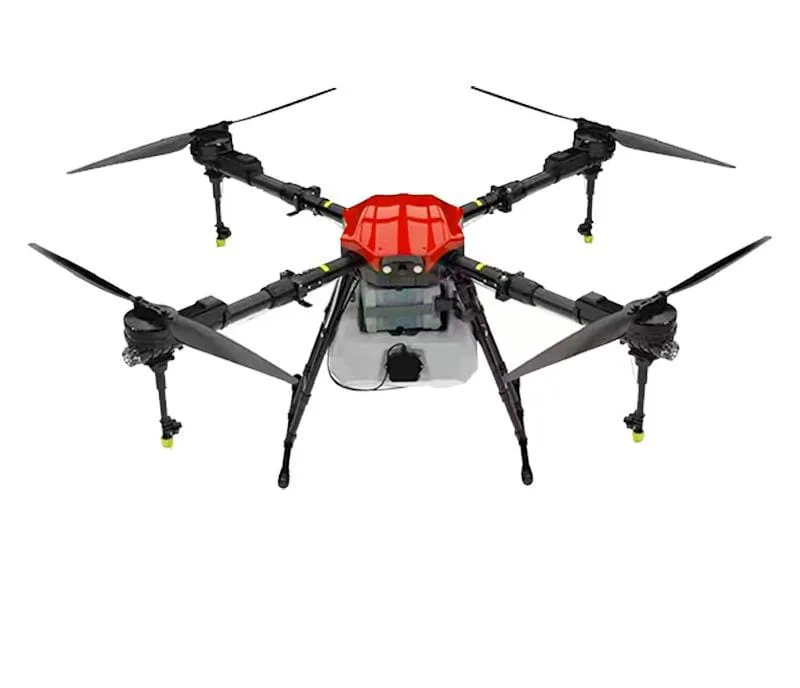
A fertiliser spraying drone applies liquid nutrients such as nano urea, nano DAP or water-soluble micronutrients as a fine foliar spray at the right crop stage. Follow the product's recommended dose and timing, check mixing compatibility before combining with pesticides, and remember foliar sprays supplement — not replace — basal soil fertiliser. Some drones can also spread granules with an attachment.
Key takeaways
- Best for top-up nutrition at key growth stages, not for the crop's full nutrient need.
- Follow the manufacturer's dose and stage — more is not better.
- Do a jar test before tank-mixing nutrients with pesticides.
- Granule spreading needs a spreader attachment and suitable granule size.
Spraying liquid fertiliser by drone
Liquid nutrients are absorbed through the leaves, so even coverage matters more than volume. A drone's downwash helps droplets reach both sides of the leaf. Nano fertilisers have been promoted for drone application in India, and many cooperatives and FPOs now combine nutrient sprays with drone services.
Common products
- Nano urea and nano DAP (liquid formulations)
- Water-soluble NPK grades for foliar feeding
- Micronutrients such as zinc, boron and iron
- Bio-stimulants, where the label permits aerial use
Timing
Foliar feeding works when the crop has enough leaf area to absorb nutrients — typically during active vegetative growth and before flowering. The product leaflet usually names the recommended stage.
Granular fertiliser and seed spreading
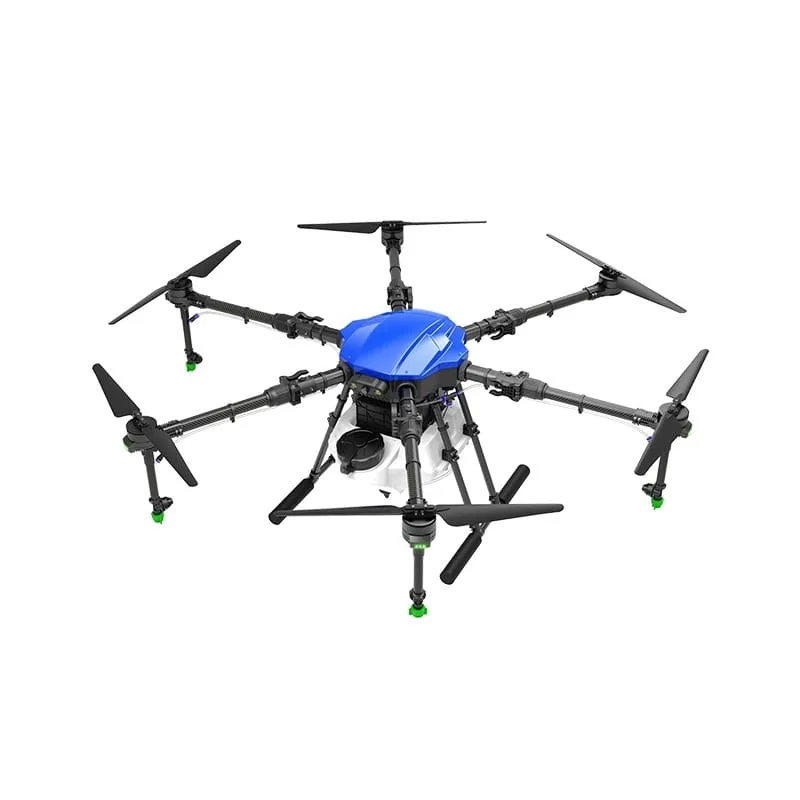
Some agricultural drones accept a spreader attachment that throws granules in a controlled swath. This can help in flooded paddy or hilly fields. Granule size, flowability and moisture affect accuracy, so test before spreading a full field. Not all drones support spreading — check the model.
Mixing nutrients with pesticides
| Step | What to do |
|---|---|
| 1 | Fill a clear jar with water in the same ratio as the drone tank |
| 2 | Add products in the order recommended on the labels |
| 3 | Shake and wait 15–30 minutes |
| 4 | If you see lumps, separation or heat, do not tank-mix |
Common mistakes to avoid
- Expecting a foliar spray to replace basal fertiliser in the soil
- Spraying on stressed, wilting crops in the afternoon heat
- Increasing the dose beyond the recommendation
- Skipping the jar test when mixing with pesticides
- Not cleaning the tank after nutrient sprays, causing nozzle blockages
Who benefits most
Large farms, FPOs and cooperatives that want to apply nutrients at the right stage across many fields in a short time get the most value. For a small farmer, combining a nutrient spray with a planned pesticide spray in a single drone visit — when compatible — can reduce the number of trips and the service cost.
How to judge whether a nutrient spray worked
Foliar nutrition rarely shows a dramatic change overnight. To know whether a drone nutrient spray was worth it, plan a simple comparison and keep notes.
- Leave a small untreated strip in the same field as a reference
- Note the crop stage, product, dose and weather on the spray day
- Compare leaf colour and growth after one to two weeks
- At harvest, compare yield from the sprayed area and the reference strip if possible
- Use soil testing to plan next season's basal fertiliser alongside foliar sprays
Soil health first, foliar spray second
Healthy crops start with healthy soil. A Soil Health Card or a soil test from an accredited lab shows which nutrients are short in your field. Use it to plan basal fertiliser and organic matter. Then use drone foliar sprays as a precise top-up at stages where the crop needs a quick boost, or where soil application is difficult — such as flooded paddy or tall standing crops.
This balanced approach gives better value than relying on foliar sprays alone and helps avoid overuse of any single nutrient.
Crop-wise uses of nutrient sprays by drone
- Paddy: nitrogen top-up at tillering and panicle initiation in flooded fields
- Wheat: nitrogen and micronutrient sprays during active tillering and before heading
- Cotton and sugarcane: nutrient sprays when the tall canopy makes manual spraying difficult
- Vegetables and fruits: micronutrient correction such as zinc or boron at key stages
Frequently asked questions
Can nano urea be sprayed by drone?
Yes, nano urea has been promoted for drone spraying. Follow the manufacturer's dose and the recommended crop stage.
Can a drone replace normal fertiliser application?
No. Foliar sprays supplement soil fertility. The crop's main nutrient needs still come from basal and top-dressed soil fertiliser.
Can fertiliser and pesticide be sprayed together?
Sometimes, if the products are compatible. Always do a jar test and follow both labels; if unsure, spray separately.
Can a drone spread granular urea or DAP?
Some drones can with a spreader attachment. Check if the model supports it and test the granules for even spreading.
When is the best time to spray liquid fertiliser?
During active vegetative growth in calm, cool hours, when leaves can absorb nutrients well. Avoid hot afternoons.
How do I book a nutrient spray by drone?
Call 8282802150 with your crop, stage, area and the product you plan to use. We will advise on feasibility and scheduling.
About this guide
- Written by
- Kisan Drone team, Noida. We work with farmers, FPOs and drone operators on spraying, buying and training questions.
- Reviewed by
- Mohit Singh, Drone Operator — 10 years of drone-spraying experience
- Last updated
How we write
We do not publish invented prices, subsidy amounts, yields or reviews. Rules and schemes are checked against official sources, and anything that depends on your crop, product or location is marked as such. Found an error? Email enquiry@kisandrone.co.in.