Buying guide
How Are Agriculture Drone Prices Set? What to Know Before You Buy
Why kisan drone prices vary, what really drives the cost, hidden running costs and the exact questions to ask so you can compare drone quotes fairly.
Published: Updated: 7 min read
Quick answer
Agriculture drone prices are set by the tank class and payload, number of battery sets and charging equipment, type certification, navigation and safety features, warranty, spare parts and service network, and training included. Two drones with similar base prices can have very different total costs, so always compare itemised packages and add yearly running costs.
The most common question from farmers is, “How much does a drone cost?” But comparing a single number can be misleading, because different packages include very different things. One quote may include four battery sets, a generator and training; another may include one battery and nothing else. This article explains what goes into an agriculture drone's price so you can compare quotes on fair terms.
What the price depends on
Tank capacity and payload
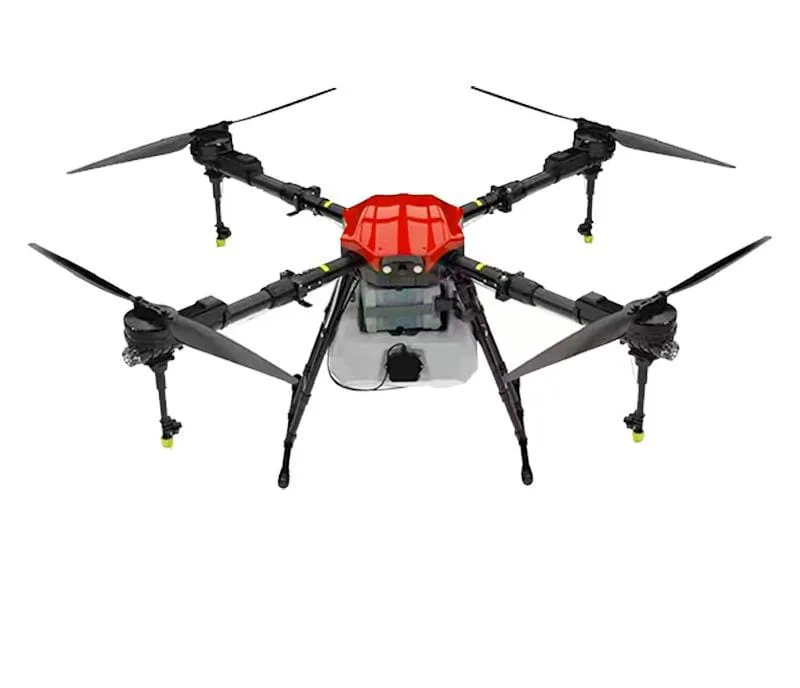
Larger tanks need bigger frames, stronger motors and bigger batteries. A 20 litre class drone usually costs more to buy and run than a 10 litre drone, but covers more area per flight.
Battery sets and charging
Batteries are a major part of the cost. For continuous work you need several sets, a fast charger and often a generator. A package's battery count changes its real value dramatically.
Certification and documents
A DGCA type certificate and support for Digital Sky (opens in a new window) registration are essential. Certified models carry development and testing costs, but an uncertified drone is a legal and financial risk.
Features
- Terrain following for uneven fields
- Obstacle sensing and automatic return-to-home
- RTK positioning for precision routes
- Spray system quality — flow control and nozzle type
- Spreader attachment for granules or seeds
Warranty, spares, service and training
A longer warranty, local spare parts, a nearby service centre and included pilot training add value that is easy to miss when you only compare base prices.
Hidden running costs
- Battery replacements as cycles wear them out
- Propellers, nozzles, filters and pump parts
- Insurance
- Pilot salary or your own time
- Fuel for the generator and vehicle
- Repairs after accidents or hard landings
Questions to ask when getting a quote
- What exactly is included in the price?
- How many battery sets, and what is the price of an extra set?
- Who will handle registration and paperwork?
- How quickly will repairs be done if it breaks down in season?
- Is training included, and where?
- Could I be eligible for any scheme? (Confirm with official sources)
How to compare two quotes fairly
Write both quotes side by side, item by item. Add the cost of anything missing from one quote — such as extra batteries or a generator — to make them equal. Then estimate yearly running costs and divide the total over three seasons by the acres you expect to spray. The result, cost per acre, is the fairest comparison.
Example: comparing two packages
Imagine Quote A offers a drone with one battery set, no charger upgrade and basic training. Quote B offers the same class of drone with three battery sets, a fast charger, a generator recommendation, field training and a longer warranty. Quote A looks cheaper, but to do real field work you would need to buy two more battery sets and a better charger — and you would carry more risk if something breaks. Once you add the missing items, the gap often shrinks or reverses.
Price, value and support
The most expensive drone is not automatically the best, and the cheapest is rarely the best value. What you are buying is a working season: reliable flights, quick repairs, available spares and a pilot who knows how to use the drone well. Ask other owners in your district how their drone performed after one or two seasons. Their experience tells you more about real value than any price list.
- Ask for references from customers near you
- Check how long repairs took in peak season
- Ask if a standby drone is offered during repairs
- Confirm spare parts are stocked in your state
When hiring beats buying
If your total area is small or you spray only a few times a season, the cost per acre of owning a drone may be higher than simply hiring a drone spraying service. Do the maths honestly before investing. Call 8282802150 for a written quote or to compare service and ownership costs for your situation.
Frequently asked questions
Is the cheapest drone the best deal?
Not necessarily. Along with a low price, check the battery sets, certification, warranty, parts and service. A drone that breaks down in season can cost more than you saved.
What should a quote include?
The drone model, number of battery sets, charger, accessories, warranty terms, training, delivery and the total price.
How much do battery costs matter?
A lot. Batteries need replacing over time and continuous work needs several sets, so always include them in the total cost.
Is the price the same everywhere?
No. Prices can vary with the package, accessories, delivery and service terms, so compare complete packages.
Does a subsidy change the drone's price?
A subsidy reduces what an eligible buyer pays, but only under official scheme rules. Confirm eligibility before buying.
How do I get a written quote?
Call or WhatsApp +91 82828 02150 with your crop, area, location and requirements, or email enquiry@kisandrone.co.in.
About this guide
- Written by
- Kisan Drone team, Noida. We work with farmers, FPOs and drone operators on spraying, buying and training questions.
- Reviewed by
- Mohit Singh, Drone Operator — 10 years of drone-spraying experience
- Last updated
How we write
We do not publish invented prices, subsidy amounts, yields or reviews. Rules and schemes are checked against official sources, and anything that depends on your crop, product or location is marked as such. Found an error? Email enquiry@kisandrone.co.in.